
Home » MONO/SINGLE CRYSTALLINE
Single Crystalline/Mono Crystalline CVD Diamond
Single-crystalline CVD diamond, also called monocrystalline or single-crystal diamond, is one unbroken crystal with no grain boundaries. IMAT offers it in electronic, optical and thermal grades, cut and polished to your size, thickness and orientation.
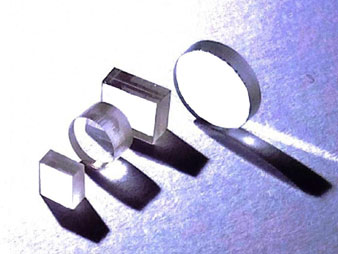
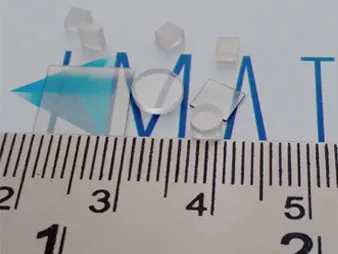
Single-Crystalline CVD Diamond (Monocrystalline) for Industrial
IMAT supplies single-crystalline CVD diamond, also known as monocrystalline or single-crystal diamond, for industrial, electronic, optical, thermal, and precision engineering use. The crystal is one continuous lattice with no grain boundaries, so its properties are more uniform than polycrystalline diamond. That makes it a strong choice where parts need tight tolerances and consistent performance.
You can choose the grade, size, orientation, and surface finish to match your design. Whether you need an electronic-grade plate for research, an optical window, or a heat spreader, we configure the diamond around your drawing.
Not sure which single-crystal diamond suits your application? Send us your requirements, and our technical team will help you pick the right material.
What Is Single Crystalline Diamond?
Single-crystalline CVD diamond is a lab-grown diamond made from one unbroken crystal lattice. It is grown by chemical vapor deposition, in which carbon atoms build up layer by layer on a seed crystal. You may also see it called monocrystalline diamond.
The unbroken lattice matters because there are no grain boundaries. Polycrystalline diamond is made of many tiny grains, and those boundaries scatter light, trap defects, and interrupt heat flow. A single crystal avoids all three. That is why monocrystalline diamond is chosen for optics, detectors, and precision cutting edges, where consistency counts.
Diamond itself brings an unusual set of properties. It is the hardest known bulk material. Its thermal conductivity can reach roughly five times that of copper. It remains chemically inert in harsh environments and transmits light from the deep ultraviolet well into the infrared. Each application below uses a different part of that profile.
Where single crystalline CVD diamond is used
- Electronics and semiconductors. Diamond moves heat and handles electrical demands that push silicon to its limits. Match the grade to your device.
- Optical windows and components. Diamond stays clear and intact where other window materials crack, cloud, or corrode. Choose the surface finish to suit your wavelength.
- Radiation detectors and quantum optics. These fields depend on near-flawless crystals. The fewer the defects, the better the signal.
- Cutting tools and diamond knives. One unbroken crystal gives you an edge that stays sharp far longer than the alternatives.
- Thermal management. Few materials pull heat away faster. If heat is what limits your design, diamond is worth a look.
- Research and engineering. Custom sizes, orientations, and finishes let your team test ideas that standard materials can’t handle.
Whether you need monocrystalline diamond for optics, electronics, detectors, or precision tools, IMAT gives you one supplier for the whole job. We grow and finish the diamond ourselves. That means you can choose electronic, optical, and thermal/mechanical grades; sizes from 1 × 1 mm to 20 × 20 mm; and polished surfaces with roughness below 3 nm. We can produce custom shapes and orientations from your drawings. You also deal directly with a Jaipur-based team that can recommend the right grade before you spend a rupee on the wrong one.
Single crystalline CVD diamond specifications
| Specification | Details |
|---|---|
| Size | 1 × 1 mm to 20 × 20 mm |
| Thickness | 0.3 mm to 7 mm |
| Grade |
|
| Surface |
|
| Type/Orientation |
|
| Edges | Laser cut or polished |
Frequently Asked Questions
Q1. Is mono crystalline diamond the same as single crystalline diamond?
Yes. Mono crystalline, monocrystalline and single crystalline diamond all describe diamond made of one continuous crystal lattice.
Q2. How is single crystalline CVD diamond different from polycrystalline diamond?
Polycrystalline diamond contains many grains separated by boundaries. Single crystalline diamond has none. That changes how it transmits light, conducts heat and behaves when machined, so the two suit different applications.
Q3. Which grades are available?
Electronic, optical and thermal/mechanical. Choose based on what your application demands of the material.
Q4. What sizes and thicknesses does IMAT offer?
Sizes run from 1 × 1 mm to 20 × 20 mm, and thicknesses from 0.3 mm to 7 mm. Contact us to confirm availability for your grade and dimensions.
Q5. How do I choose the right single crystalline diamond?
Start with your application, then work through dimensions, thickness, orientation, roughness, flatness and operating conditions. If you’d rather not decide alone, send us those details and we’ll recommend a configuration.
Q6. How do I request a quote?
Use the enquiry form and include dimensions, thickness, grade, finish, orientation, quantity and application. A drawing helps if you have one.